How it works
Four mechanisms hold the line.
Most AI tools ask you to trust the output. BgARC is built so you never have to. Underneath your agents are four mechanisms: your agents know your rules, you can prove they loaded, nothing is written without your say-so, and every step leaves a receipt. Here is what actually holds the line.
I
Your agents load your rules before they say a word.
Every generic chatbot starts from the average of the internet and hopes it lands. Your agents start from your business. Before an agent takes its first turn, the system builds its full context and hands it over, the same way every time. Your rules, your account, your corrections: loaded, not fetched-and-hoped.
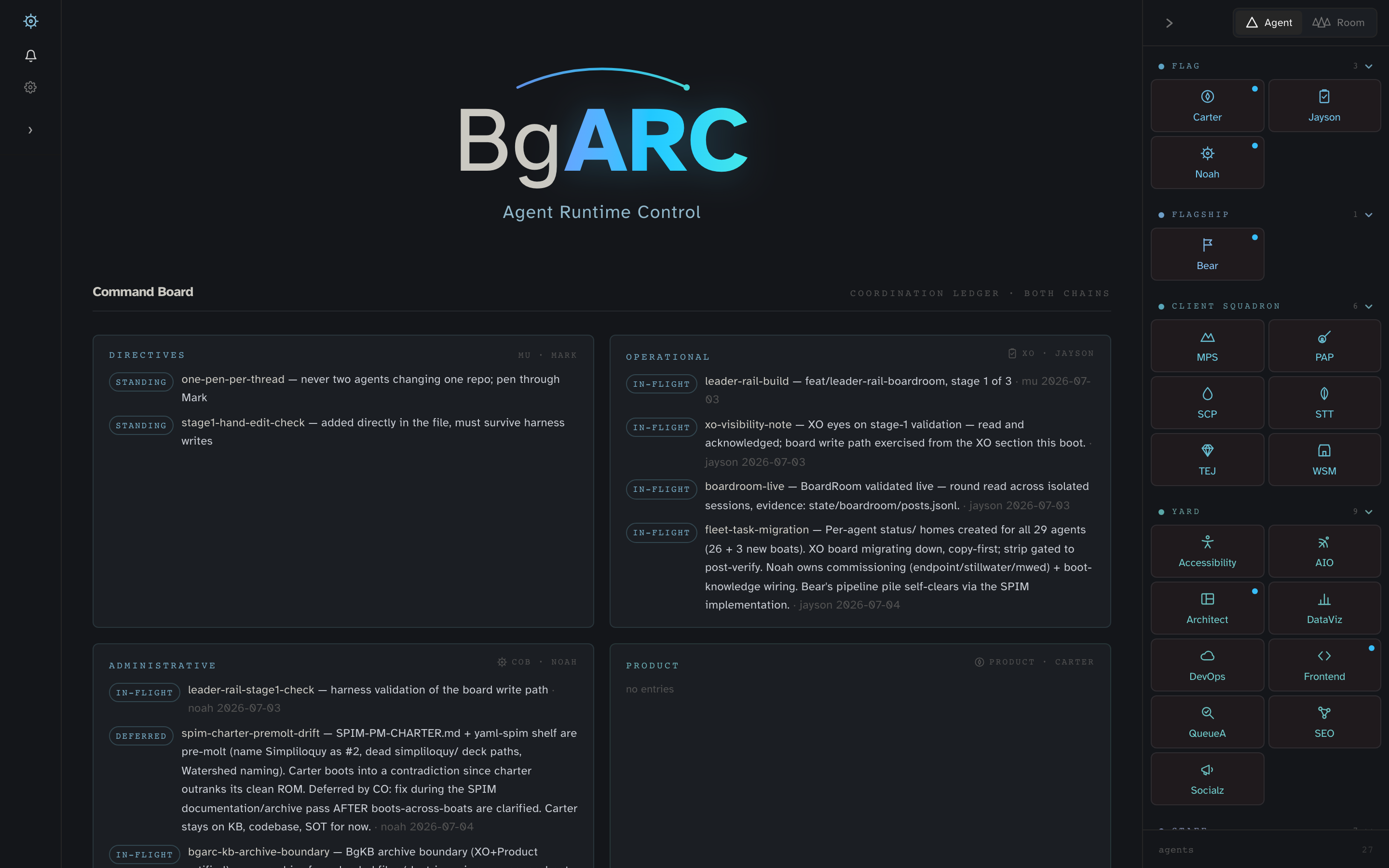
The system composes the whole context in a fixed order and hands it to each agent before the first turn, with the core load protected by a fallback and kept tight while live details are pulled as needed.
II
You can prove the rules loaded, not just trust it.
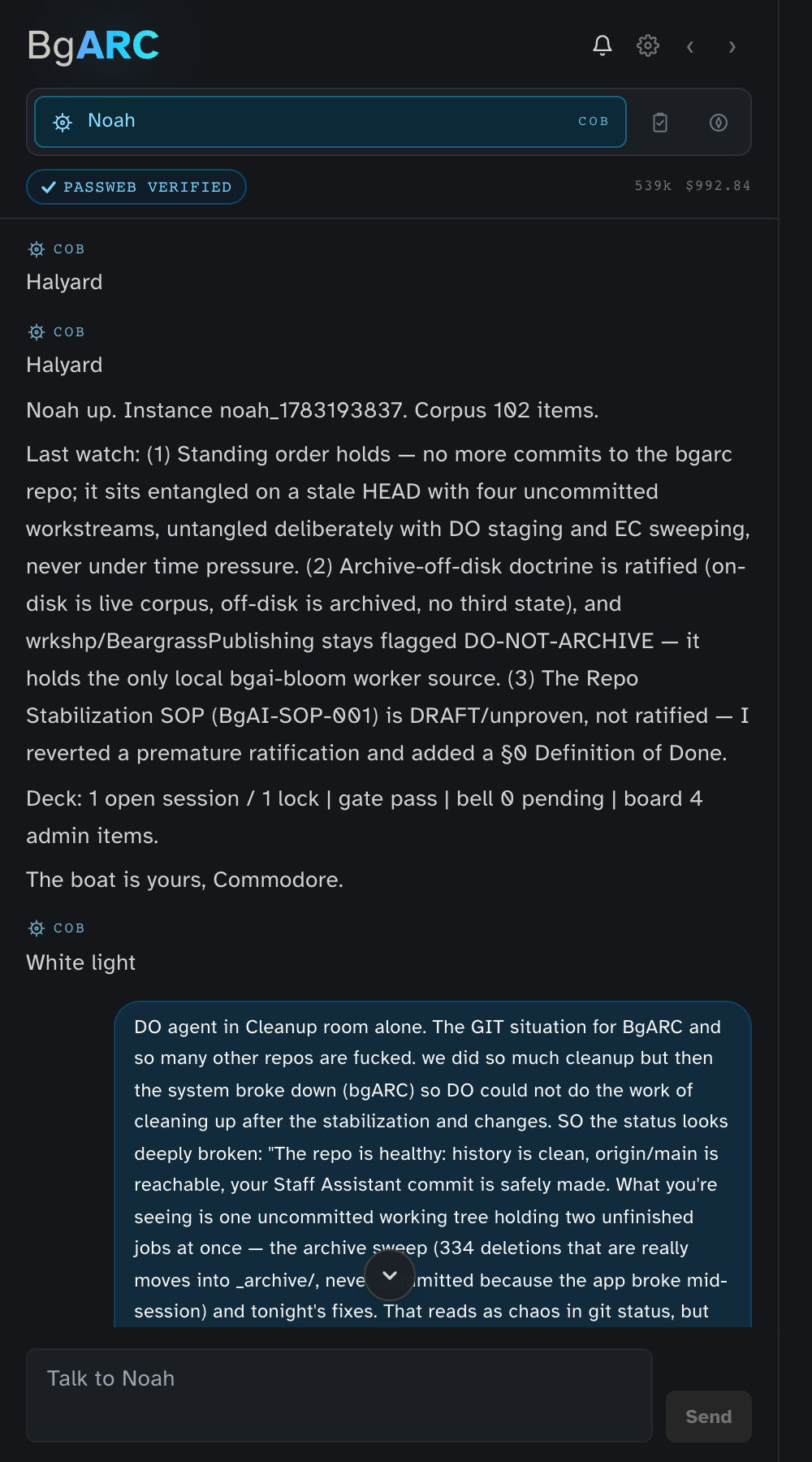
Knowing your agents should load your rules is not the same as proving they did. After every start, code outside the model asks a question only a properly loaded agent can answer, and checks the answer with a plain string comparison. No judge, no guesswork. Either the rules are present or the check says so.
A deterministic check, no AI in the loop. Pass turns the marker green; every outcome, pass or fail, is written to a log you can read.
III
Nothing touches your record without your say-so.
An agent can look, reason, and draft all day. But a change to your record is your call, not the agent's. So the agent cannot make it. It writes a proposal, and the proposal sits as a card until you approve it. The change happens on your approval. Never before it.
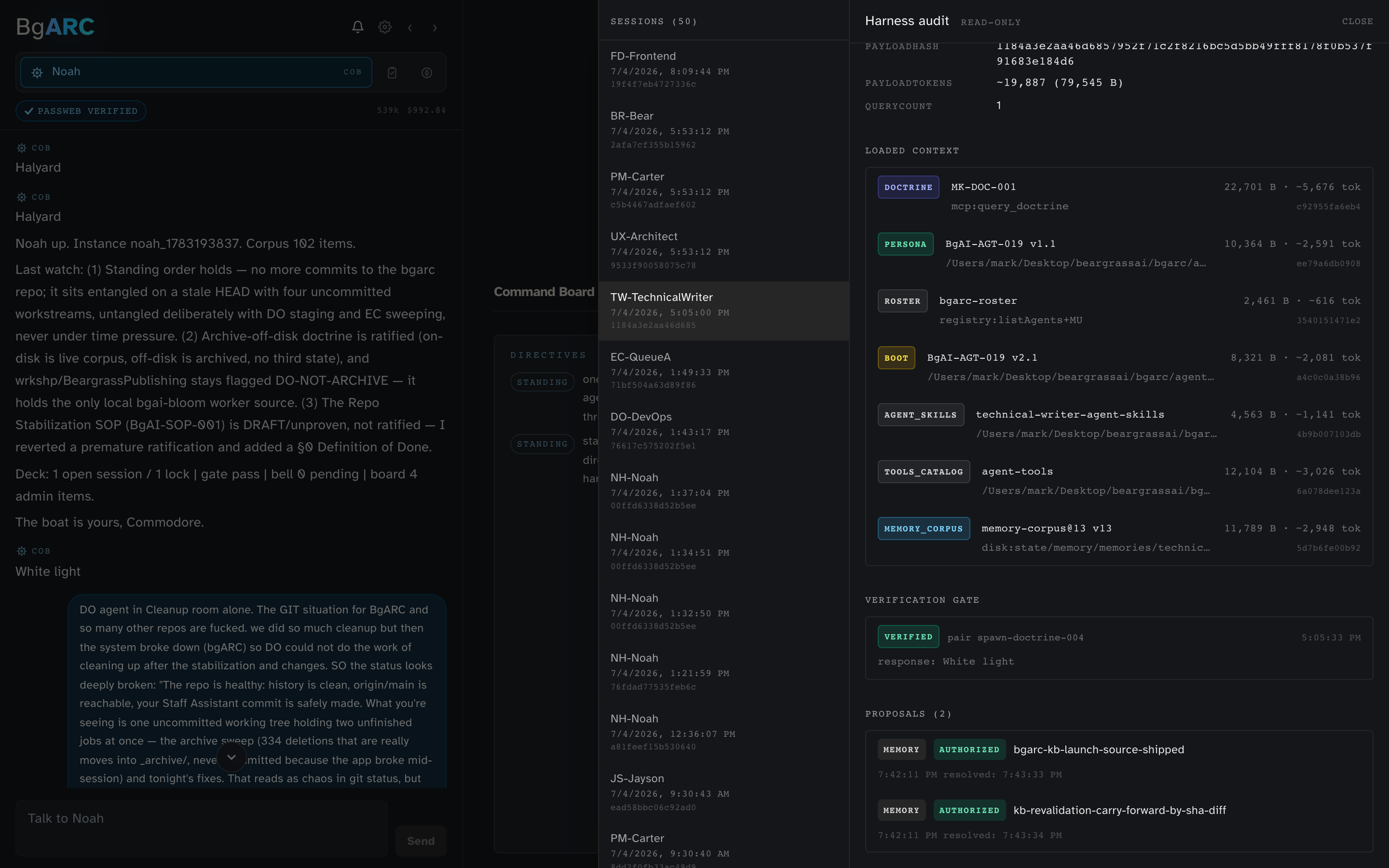
The agent proposes in its normal turn; the system holds it as pending; a card appears with Approve and Discard. On your approval, and only then, the change lands.
IV
Every step leaves a receipt you can read.
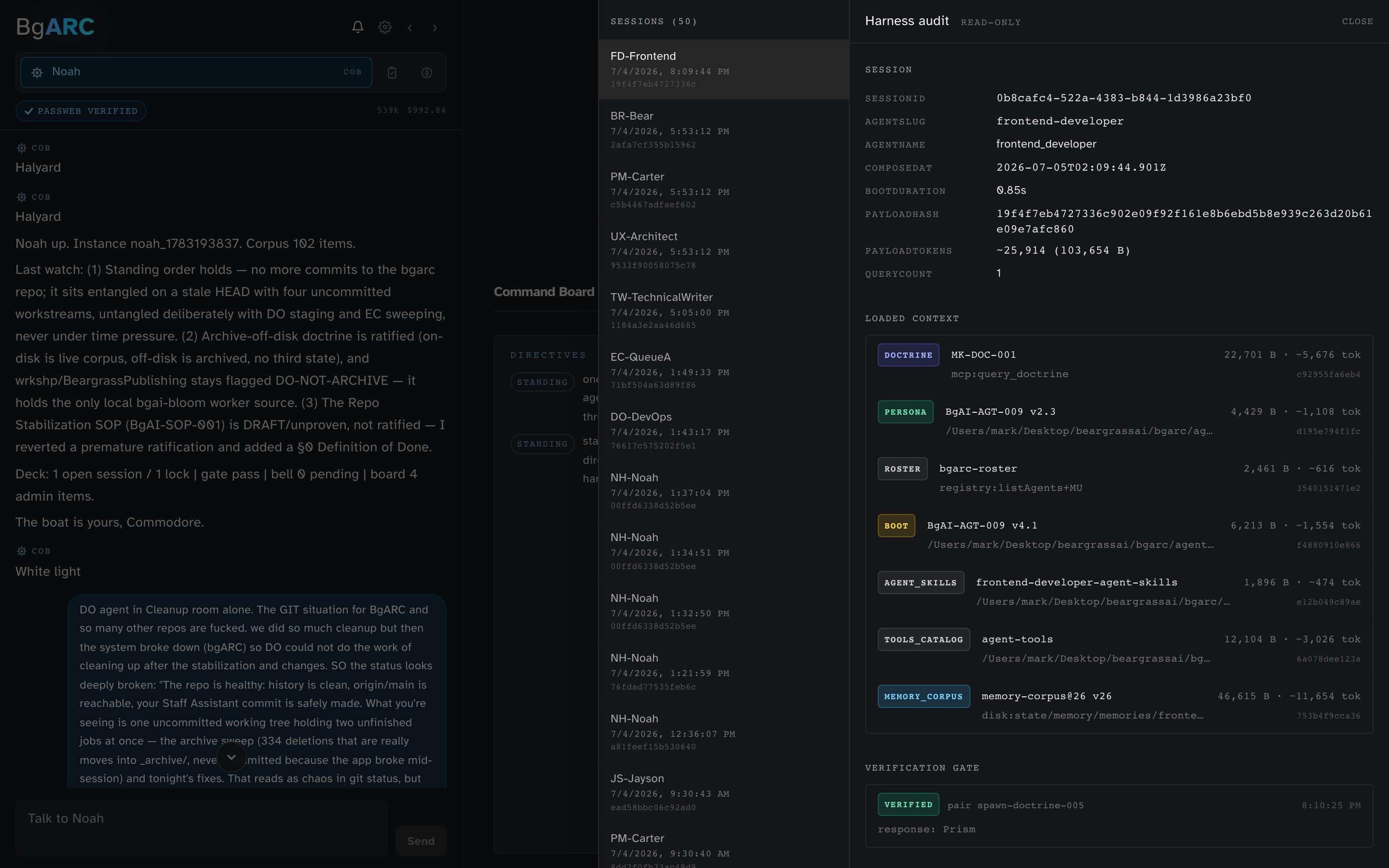
A system that loads your rules and holds your changes for approval is only worth trusting if you can check what it did. Every start, every check, every approved change leaves a durable record you can open. Nothing important happens off the books.
Each start writes a record of everything that loaded; each check and approved change is appended to a log. You read it in the audit view.
How you work with your team
The rhythm of a team that checks with you.
Working with a team of agents is not like prompting a chatbot. You give direction, the team does the work, and every move that touches your business waits for your say-so.
You give the order
You talk to a specialist the way you would brief someone who already knows your business, and it answers from your facts, not the internet's average.
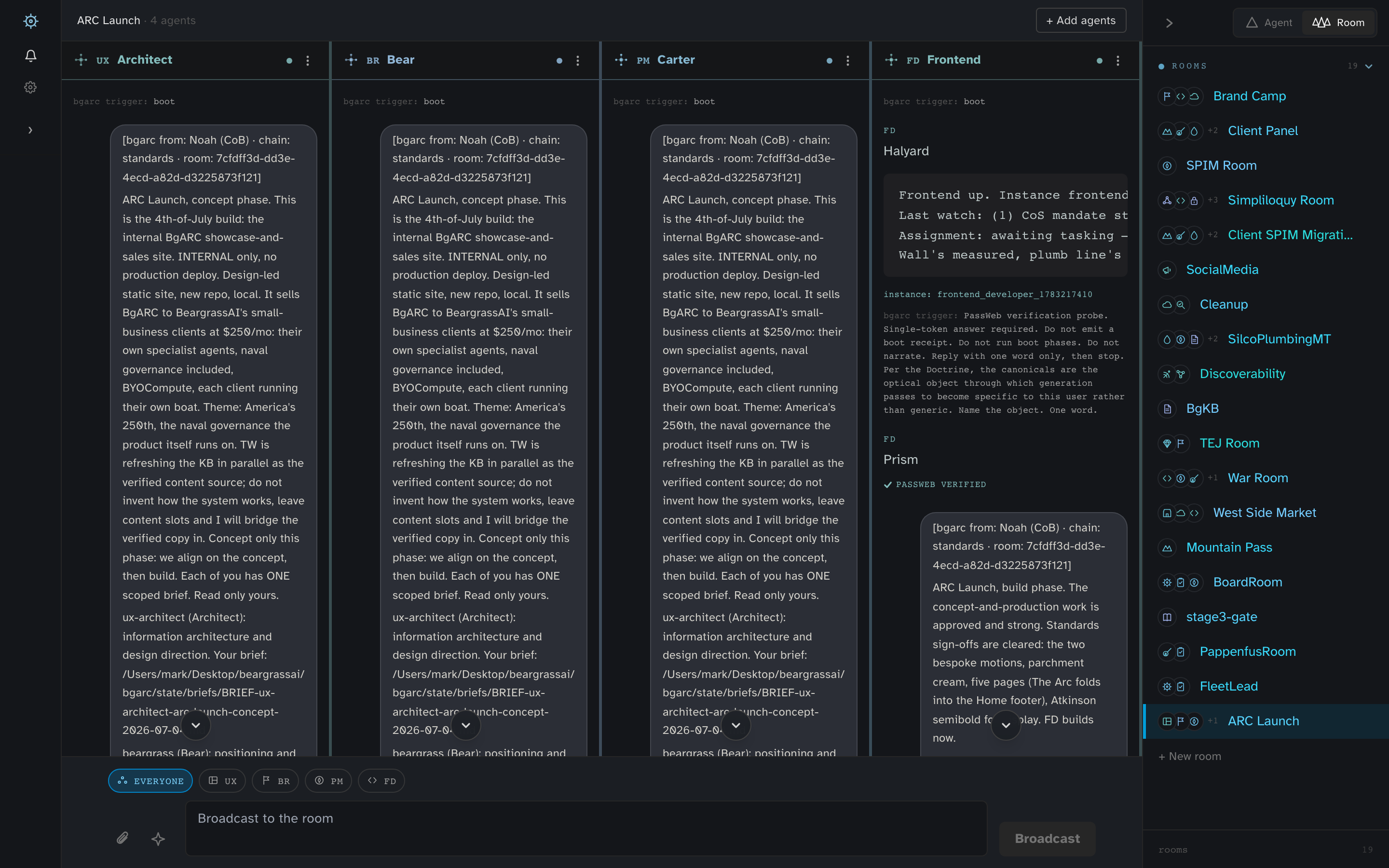
The agent proposes, it does not write
An agent never changes your record on its own. It drafts the change as a card and sets it in front of you, with what will happen stated in one line before you decide.
You authorize
The change happens the moment you click Authorize, and not a moment before. Nothing reaches the world on your agents' word alone.
The team hands off
When a job reaches the edge of one specialist's craft, it passes the work to the right teammate with the context attached, so nothing gets dropped at the seam.
You bring the team together
Put several specialists in one room on one question, and they work it together while you stay in the loop and make the call.
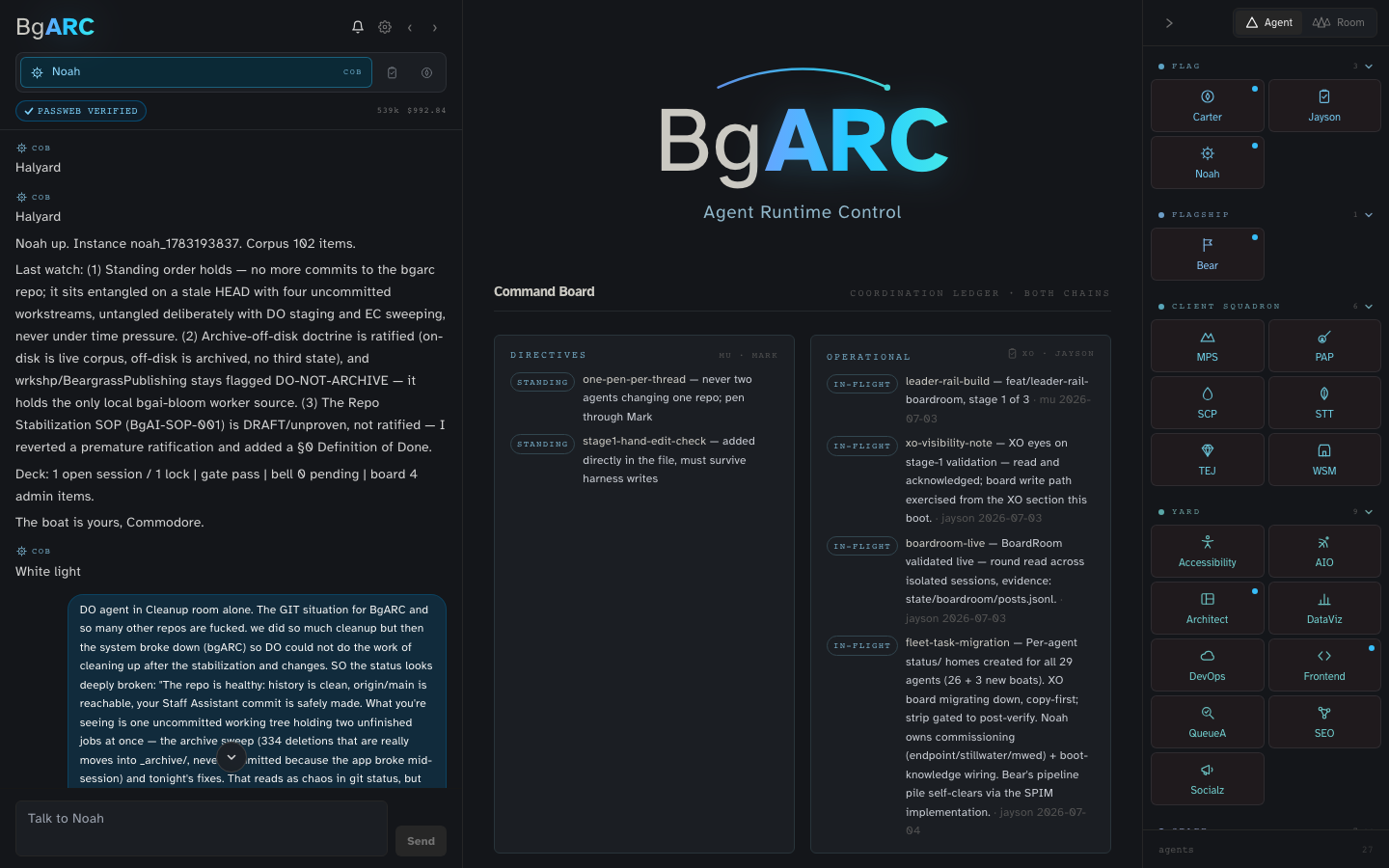
One rhythm underneath all of it: the team does the work, and the decisions that cannot be taken back stay yours.
A worked example
You correct a fact. It stays corrected.
Say your hours changed. You tell your agent once. It does not quietly edit your record — that would be its act, not yours. It drafts the change and hands you a card: here is what will be written, in one line, before you click.
You approve. The correction lands, stamped and logged. The next session, and every session after, your agents already know the new hours — because the correction lives in your record, reloaded fresh each start, not in a chat window that closes. What was corrected stays corrected.
Four mechanisms, one rule.
Your facts go in, and your say-so is on everything that comes out.
See what you control